


Please click here to opt in to receive via email our Roundup—brief daily summaries of news developments and commentary related to executive power.
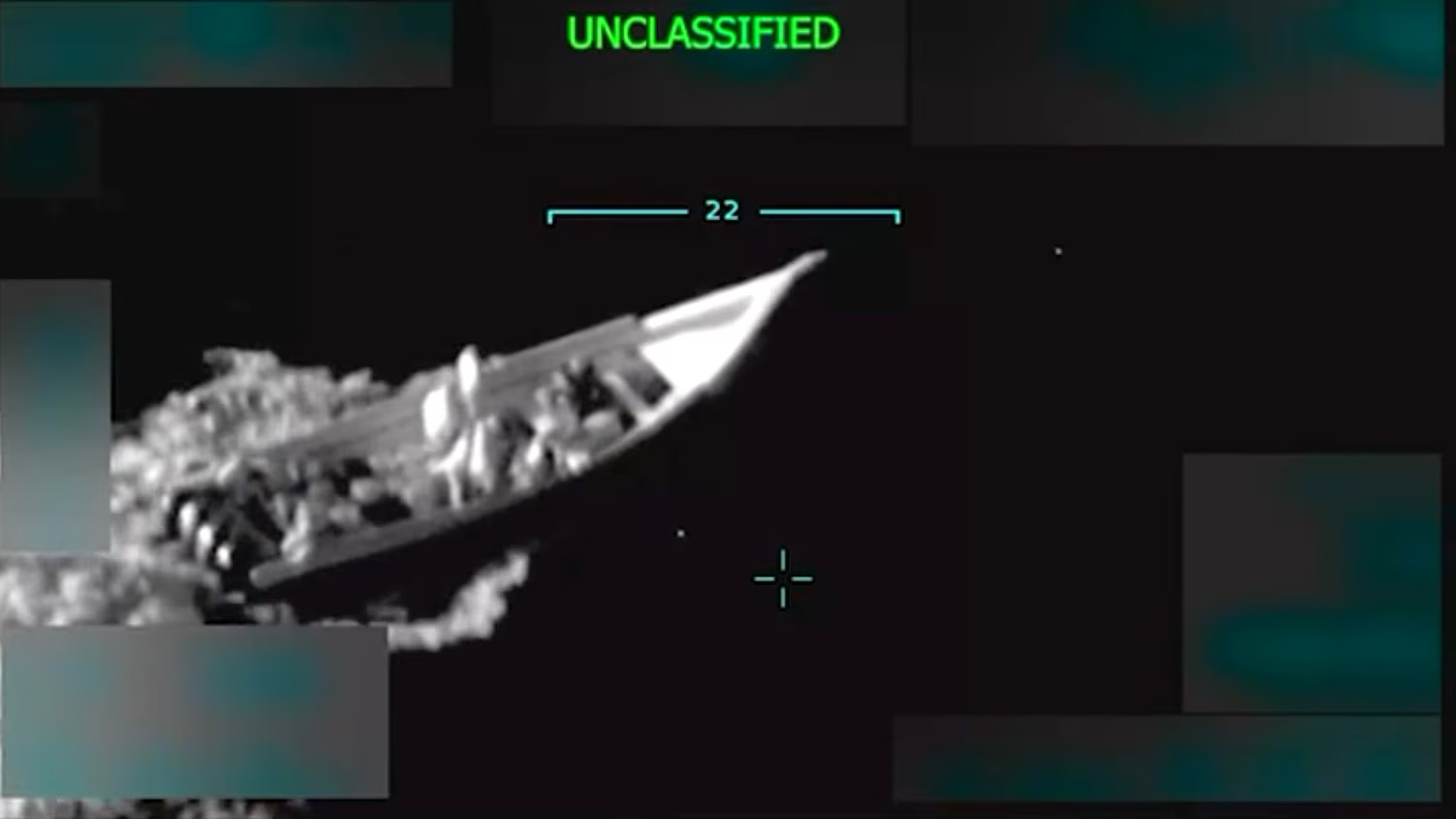
The furor over the Venezuela boat strikes on Sept. 2, 2025, the second of which killed two survivors of the first attack, can be understood on various levels. One involves the familiar line of inquiry that has defined national scandals since Watergate: “What did they know and when did they know it?” Did Secretary of Defense Pete Hegseth issue an order in violation of law, authorizing murder? The press is looking for answers, testing ambiguous and conflicting statements from Hegseth and administration spokespersons. The administration defended itself in part with accounts from sources offering detail but only on the condition of anonymity. Congress is also pressing for the facts of the matter and, so far on a bipartisan basis, may be launching a formal investigative inquiry. This quest to establish what happened, as the indispensable step toward holding the government accountable as the facts may require, is unquestionably of the highest importance.
On another level, the episode as it is unfolding distills much of how this presidency seeks to establish and vindicate Trump’s expansive view of presidential power and defend against challenges brought under a more conventional model of executive accountability. This post identifies the basic elements of what for these purposes I will refer to as “the boat strike presidency.” To one extent or another, these elements may be familiar from the experience so far with Trump 2.0, but they come together in illuminating fashion in the case of the boat strikes.
Presidential Accountability for Policy
President Trump has stated that the United States is at “war” in the Caribbean Sea, as justification for launching lethal air strikes against seaborne targets of alleged drug traffickers he connects to the Maduro government of Venezuela. His defense secretary has committed to kill those his administration has deemed to be “narco-terrorists” trafficking in drugs destined for the U.S. mainland. This killing, Hegseth has declared, has “only just begun.” Trump has said that military operations may expand soon to land, and he announced in a Truth Social post on Saturday that he was, with some unspecified authority and unlikely effect, closing airspace over Venezuela.
So the president has said. He has not seen it as necessary to explain more comprehensively or clearly the basis for this policy—one that involves the active deployment of military force against a country with which the United States is not at war. Under normal circumstances, the president might make his case in an Oval Office address. His secretary of state might assist in supporting these claims with a major policy address, taking questions from the press (see below). He might actively engage the Congress on both sides of the aisle to develop whatever level of support he can from that quarter.
None of this, however, is Trump’s standard operating procedure. One explanation—likely the dominant one—may be found in White House Press Secretary Karoline Leavitt’s assertion that the president derives the necessary public backing for his actions from his 2024 victory. His willingness to do whatever it takes—whatever he concludes that it takes—to stop narcotics trafficking into the U.S. is “one of the many reasons the American public reelected this president.” This president, like others before him, appeals to his election as a mandate for his actions, but Trump takes it further. He appeals to his election as continuing proof of public support for whatever he decides to do and as sufficient basis to relieve him of other obligations of accountability. Stephen Miller, a close adviser, has offered his view that “the whole will of democracy is imbued into the elected president.”
And while Miller was speaking in that instance of presidential control of the executive branch, this perspective fits with Trump’s general understanding of the sources of his authority. The president has avowed that it is “good to have a strongman at the head of a country” and it is reasonable to understand from Trump’s repeated references to the size and historical nature of his election victories that these are, for him, the foundation of his claim to exercise sweeping powers. As constitutional theory, it holds, as he has stated, that once elected, “I have the right to do whatever I want” under Article II.
Presidential Accountability to the Law
As has been reported throughout the last year, Trump has set up this presidency to minimize the cautions and limits that fully independent legal advisers would provide. Experts have “resoundingly rejected” the administration’s claims that boat strikes have been legal, and critical commentary has bridged the ideological divide. The Office of Legal Counsel (OLC) has apparently opined to the contrary, but the administration has not released the opinion. In any event, there is no reason to doubt that OLC’s actions will demonstrate that loyalty is the order of the day among the administration’s legal advisers, beginning with the attorney general. So far, in this term, those government lawyers who are not sufficiently dependable are shown the door or decide to leave before they are asked to do so.
Presidential Accountability and the Pardon Power
The protection of administration officials from legal liability in the conduct of the boat strikes is assured only as long as Trump’s term of office. But President Trump has a decisive card to play, the pardon power. Like no other president before him, he is wielding it openly and repeatedly for political purposes, granting clemency to more than 1,600 people (and counting) in just the first year of this second term. Whatever may emerge about the conduct of Hegseth or the admiral in charge of the strikes, the president can—and, as Jack has written, “no doubt will”—eventually move them out of legal harm’s way.
Presidential Accountability and the Congress
We have seen from this president the expectation that his own party in Congress will be loyal and hold the line for him, or else, and he has threatened those who decline or hesitate to do as directed. He failed to impose his will in the extraordinary case of the law requiring, with exceptions, the release of the Epstein files, but it is also far from clear that he will “faithfully execute” this statute, any more than he complied with the TikTok ban. In the boat strike case, it is also uncertain what level of cooperation he will supply to a congressional inquiry into the second Sept. 2 strike.
Today, the administration made Adm. Frank Bradley, who reportedly ordered the second strike, available for a closed-door briefing of congressional leadership, and he denied that he received “grant no quarter” orders that resulted in the killing of the first attack’s survivors. The administration also showed the members a video of the attack, but they promptly disagreed over what it did, or did not, establish. It is reported that the lawmakers will be demanding more information about the original written order for the Sept. 2 strike, which the administration has so far declined to provide, and about the planning for survivors. There are numerous moves left for the administration to resist or limit accountability to Congress.
Another significant development is the president’s readiness to weaponize the Department of Justice against members of Congress who cross him. He has claimed that six members of Congress engaged in “seditious behavior” when—as U.S. military officials were reportedly questioning the legality of the strikes on alleged drug traffickers—the lawmakers joined in an online video calling for military officers and servicemen to refuse illegal orders. The FBI has since begun seeking to interview these members. Trump may not issue further threats or direct additional action of this nature in relation to the boat strike matter, but members of Congress know that they can become targets of politicized prosecution, just as they can benefit from politicized pardons.
Presidential Accountability and the Press
Press Secretary Leavitt has aggressively defended the administration’s boat strikes, but however her combative performance is evaluated, she faces the credentialed White House press corps on a regular basis. Notably, the Pentagon now does not. It has instituted a restrictive policy for issuing press access to the building and to Department of Defense sources that media organizations, Fox News included, have roundly rejected, with the result that they cannot now attend Department of Defense briefings. Those briefings are now largely the exclusive preserve of Trump-loyal influencers and commentators. The signature Trump attack on “fake news” has translated into institutional adjustments to limit the administration’s exposure to press it deems hostile or questions it does not wish to have to answer. (The New York Times sued the administration today to challenge these restrictions as an unconstitutional “speech- and press-restrictive scheme.”)
Conclusion: The Boat Strike Presidency
The boat strike episode displays, to varying degrees and in combination, the distinctive governing aspirations and strategies of this presidency, but the administration cannot fail to see that it has become a political problem. Leaks within this administration suggest that it has to contend with resistance from within the military and bureaucracy. Trump’s once-reliable support inside the Republican ranks of the Congress has shown signs of fraying. Public restiveness over the economy, reflected in weak Republican performance in recent elections, adds to his troubles within his own party and perhaps, too, more limited tolerance within his own base of voters for what may seem a diversion from the domestic policy focus they expect him to maintain.
Under these pressures, President Trump may have no choice but to deal somehow with the “what did they know and when did they know it” line of questioning in the ongoing boat strike controversy. But it is fair to conclude that he faces this challenge because of the nature and conduct of this presidency, and what is unique about it may also shape his strategies for dealing with these questions, as well as set the limits of the accountability he is prepared to accept. The old presidential model is being tested by the new one he represents, and it is too early to assess what resolution, if any, will emerge from the conflict.
It will be a test, too, of his confidence that he could “shoot somebody” and not “lose any voters,” even if the site for this event has shifted from Fifth Avenue to the Caribbean and the shooting was by the hand of someone who may have acted at his direction or authorization, or now with his protection. As it happens, public support for the boat strikes on just his say-so, without other legal authorization, is very low. Trump seems well aware of this: He has expressed support for Hegseth while asserting that he himself “wasn’t involved in it,” that he did not “know anything about it” and that he “wouldn’t have wanted that, not a second strike.”
