


Please click here to opt in to receive via email our Roundup—brief daily summaries of news developments and commentary related to executive power.
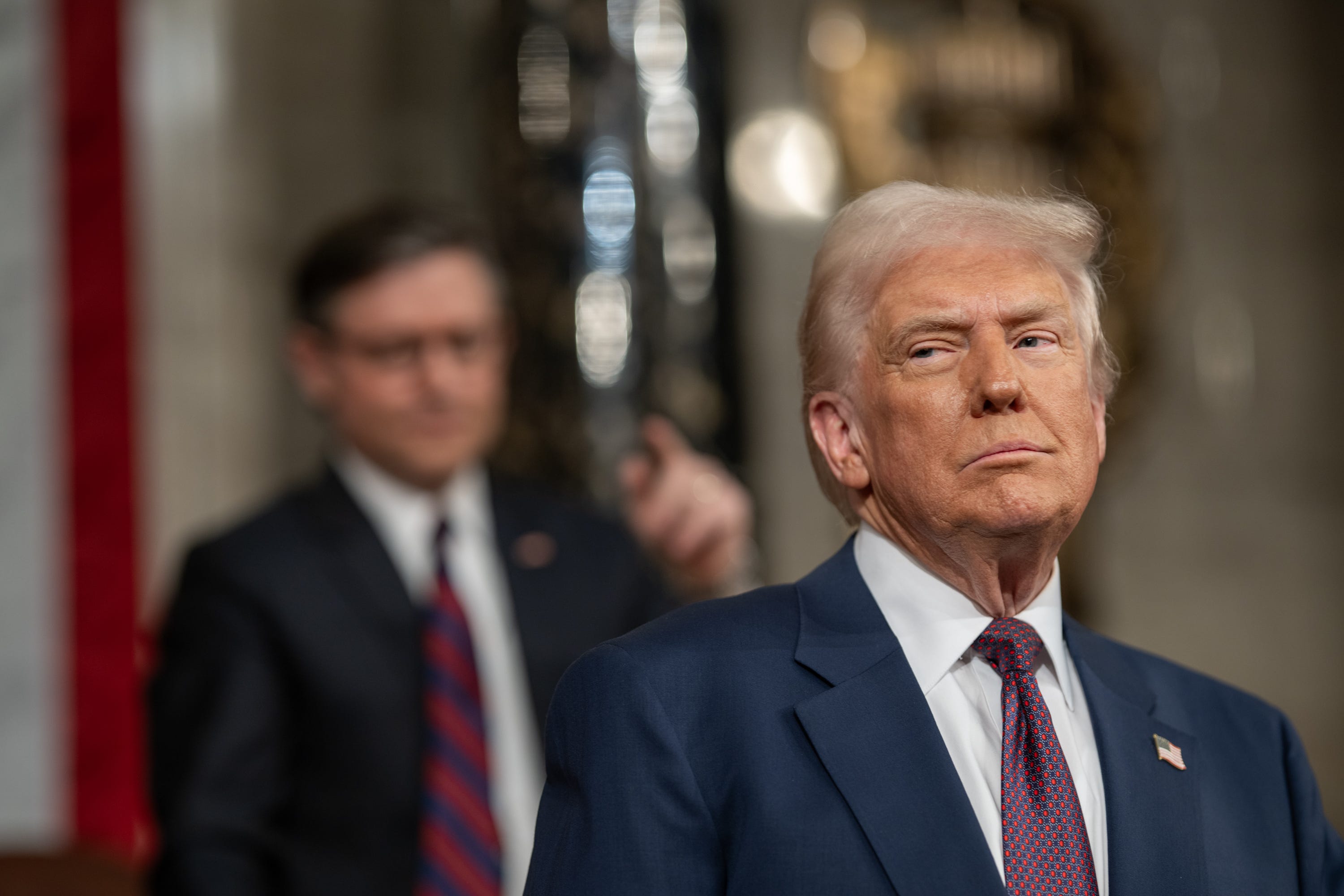
A memorandum of understanding between the United States and Iran was digitally signed on Sunday and a formal signing ceremony is set for Friday. A senior U.S. official today disclosed the full text of the MOU.
The United States in the MOU pledges “immediately” to “issue waivers for export of Iranian crude oil, petroleum products and derivatives, and all associated services, including banking transactions, insurances, transportation, etc.” (Emphasis added here and throughout.) These waivers presumably include waivers of U.S. statutory sanctions against Iran.
I don’t think the president has the authority under domestic law to issue these waivers. The Iran Nuclear Agreement Review Act (INARA) of 2015 applies here and temporarily bars a president from waiving sanctions against Iran. The executive branch has counterarguments, to be sure. And it’s doubtful that any institution will make the president comply with INARA in any event.
INARA and the MOU
INARA was enacted with broad bipartisan support. It sought to make President Obama submit to Congress a nuclear agreement with Iran known as the Joint Comprehensive Plan of Action (JCPOA); to force his administration to publicly defend the agreement; and to give Congress a short window to review and possibly reject it, during which period the president was barred from providing Iran with certain sanctions relief.
The act, however, is written in general terms. It requires “the President” within five days of “reaching an agreement with Iran relating to the nuclear program of Iran” to submit to Congress the agreement, other documents, and a “certification” concerning the agreement’s consistency with U.S. non-proliferation objectives and related matters. During the period for transmitting the agreement and a (presumptive) 30-day congressional review period, the president “may not waive, suspend, reduce, provide relief from, or otherwise limit the application of statutory sanctions with respect to Iran under any provision of law or refrain from applying any such sanctions pursuant to” an agreement relating to Iran’s nuclear program.
INARA requires President Trump to submit the MOU and related documents to Congress, and bars him from waiving statutory Iranian sanctions for at least 30 days, because the MOU “relat[es] to the nuclear program of Iran.”
Here are the material paragraphs:
Paragraph 8. The Islamic Republic of Iran reaffirms that it shall not procure or develop nuclear weapons. The United States of America and the Islamic Republic of Iran have agreed to resolve the disposition of stockpiled, enriched material pursuant to a mechanism that will be mutually agreed upon in accordance with the schedule mentioned in Paragraph 7, with the minimum methodology to be down-blending on site under the supervision of the I.A.E.A. The two parties also agreed to discuss the issue of enrichment and other mutually agreed matters related to the Islamic Republic of Iran’s nuclear needs, based on the statutory framework being agreed upon in the final deal. The final deal will confirm the provisions of this paragraph. The United States of America and the Islamic Republic of Iran acknowledge the critical importance of the nuclear issues above mentioned, and express their intention to immediately address these issues in the negotiation in order to achieve mutual agreement on them.
Paragraph 9. Pending the final deal, the United States of America and the Islamic Republic of Iran agree to maintain the status quo. The Islamic Republic of Iran will maintain the current status quo of its nuclear program, and the United States of America will not impose any new sanctions, and will not deploy additional forces in the region.
The first sentence of Paragraph 8 is a clear pledge by Iran related to its nuclear program. (President Trump has boasted that the MOU prevents Iran from developing a nuclear weapon and stated that Iran “agreed to never have a Nuclear Weapon!”). So is the second sentence, where the parties “agreed” to resolve “the disposition of stockpiled, enriched material . . . with the minimum methodology to be down-blending on site under the supervision of the I.A.E.A.” The rest of the paragraph is a pledge to discuss and negotiate about enrichment and other nuclear matters with an eye on a final deal.
In Paragraph 9, the parties “agree” to maintain the status quo, which is that (i) Iran will maintain its nuclear program as is, and (ii) the United States will not impose new sanctions (among other things). Part (i) makes the agreement one related to Iran’s nuclear program since Iran pledges not to change its nuclear program. When added to Iran’s pledge in Paragraph 8 not to build nuclear weapons, the agreement clearly relates to Iran’s nuclear program.
These conclusions are consistent with INARA’s definition of “agreement,” which means “an agreement related to the nuclear program of Iran that includes the United States, commits the United States to take action, or pursuant to which the United States commits or otherwise agrees to take action.” The MOU relates to the nuclear program of Iran for reasons just stated. And the United States commits to take many actions in the agreement, including waiving sanctions.
Counterarguments
The executive branch will disagree with this analysis.
It may claim that the thrust of the agreement is to push off any final agreement about Iran’s nuclear program, and thus is not itself an agreement relating to Iran’s nuclear program. Put another way, the MOU is analogous to a “term sheet” about a later agreement on Iran’s nuclear program that does not rise to the level of an agreement relating to the program.
This argument, in addition to its political embarrassment, doesn’t work. The MOU contains present-tense pledges beyond putting off a final resolution of some issues related to Iran’s nuclear program. Most clearly, Iran’s reaffirmation to not “procure or develop nuclear weapons,” and its agreement to “maintain the current status quo of its nuclear program,” are pledges to do something now, not later, related to Iran’s nuclear program. And that means that the MOU, whatever else it may be, is an agreement related to Iran’s nuclear program.
This conclusion is bolstered by INARA’s broad definition of “agreement.” After the quoted definition above, the statute states that it applies to an agreement related to the nuclear program of Iran—
“regardless of the form it takes, whether a political commitment or otherwise, and regardless of whether it is legally binding or not, including any joint comprehensive plan of action entered into or made between Iran and any other parties, and any additional materials related thereto, including annexes, appendices, codicils, side agreements, implementing materials, documents, and guidance, technical or other understandings, and any related agreements, whether entered into or implemented prior to the agreement or to be entered into or implemented in the future.”
Even if the MOU were like a term sheet, which it isn’t, it would fall within this definition.
The executive branch’s best argument may be that INARA applies only to the 2015 JCPOA and not to a later agreement related to Iran’s nuclear program. Parts of the statute specifically refer to the “Joint Plan of Action.” But the central obligations apply to “the President” and are triggered by “an agreement with Iran relating to the nuclear program of Iran.” The statute defines “agreement” in general terms that sweep in a broad array of agreements. And both the transmittal duty and congressional review provisions are generally phrased and not limited to the JCPOA.
The administration might also claim that INARA’s ban on lifting sanctions is triggered only if the president submits the MOU to Congress, and that if he declines to do so, even in the face of a legal duty, the bar is inapplicable. I think Section 135(b)(3) of the act rules this out. It ties the bar on lifting sanctions not to the president’s actual transmittal of the agreement, but rather to “the period for transmission” of the agreement and “the period for congressional review” specified by the act. The limitation thus applies regardless of whether transmission occurred.
The executive branch may further contend that INARA cannot apply to the MOU since the MOU is a step in an ongoing executive branch negotiation with Iran toward a final and broader agreement related to Iran’s nuclear program. The argument would be that INARA interrupts the negotiation and thus impinges on the president’s exclusive power over diplomacy. (The administration might also invoke the Commander in Chief Clause, since this agreement and ongoing negotiations relate to war; but I will set that aside for now.)
I don’t know any Supreme Court decision or any supportive historical practice that comes close to saying that the president can decline to comply with the statutory terms and conditions of domestic statutes that give him powers he otherwise lacks because he wants to defy those conditions in the service of an international negotiation.
To be sure, the Supreme Court in Zivotofsky affirmed the president’s “unique role in communicating with foreign governments” and relied on Curtiss-Wright’s statement that the president “is the sole organ of the nation in its external relations, and its sole representative with foreign nations.” The Court also cited Curtiss-Wright for the proposition that the “President has the sole power to negotiate treaties.” (As I explain here, Zivotofsky cast doubt on other aspects of Curtiss-Wright.)
The Office of Legal Counsel has relied on these and other precedents to claim a super-broad exclusive power to conduct diplomacy. One can imagine OLC stating that the INARA unconstitutionally impinges on the president’s power to conduct diplomacy and make international agreements, or, more likely, that constitutional avoidance requires reading the MOU not to violate INARA.
The OLC opinions run far beyond what the Supreme Court has actually held, and relies on its own understanding of practice (and executive branch legal interpretations) as much as Supreme Court precedents. Jean Galbraith has powerfully criticized the “Runaway Presidential Power over Diplomacy,” and especially the leveraging of the diplomatic power to disregard substantive policy constraints in enacted statutes, which is implicated here.
Enforcement
The executive branch has a massive advantage in any interpretive dispute over INARA: it can interpret the statute and the Constitution for itself and act on that basis, forcing Congress or other parties or institutions to stop it.
The two institutions that could potentially stop it are Congress and the federal judiciary. I doubt either will do so.
Congress is very unlikely to vote to reject the MOU, which in any event would require veto-proof majorities to succeed. Congress is controlled by the president’s party (though some Republicans are furious with the deal). And majorities in Congress have recently backed resolutions to end the war with Iran (though the Senate yesterday narrowly rejected the latest effort).
A lawsuit is also likely to fail. The main but far from only hard issue is whether anyone has standing to raise the INARA issue. I am skeptical that Congress or some of its members would have standing to sue. The statute does not authorize congressional lawsuits and it contemplates a fast-track procedure for disapproving a covered agreement. These factors cut against congressional or member standing, which is always hard.
There may be private businesses that compete with newly unsanctioned Iranian entities that suffer economic injury. But it is unclear whether any such competitor can show (as standing doctrine requires) that the waivers caused the injury or that an injunction would redress it. A better case for standing could occur in a contract dispute where the applicability of INARA was raised as a defense, but it is unclear to me whether this situation will plausibly arise.
***
It was unthinkable in 2015 that INARA would be deployed against a Republican president who sought in an agreement related to Iran’s nuclear program to waive sanctions against Iran. And before President Trump began his military action against Iran in February, it was unthinkable that he, a famous critic of the JCPOA, would be making such an agreement. But here we are.
President Trump has reportedly said that he “like[s] the idea” of submitting the MOU to Congress for review and approval. Perhaps he thinks that, and perhaps his administration will do so. But the administration is not going to delay implementing the pledges it made in the MOU because of INARA.
Thanks to Matthew Waxman for conversation and comments and Tia Sewell for editorial assistance
