


Please click here to opt in to receive via email our Roundup—brief daily summaries of news developments and commentary related to executive power.
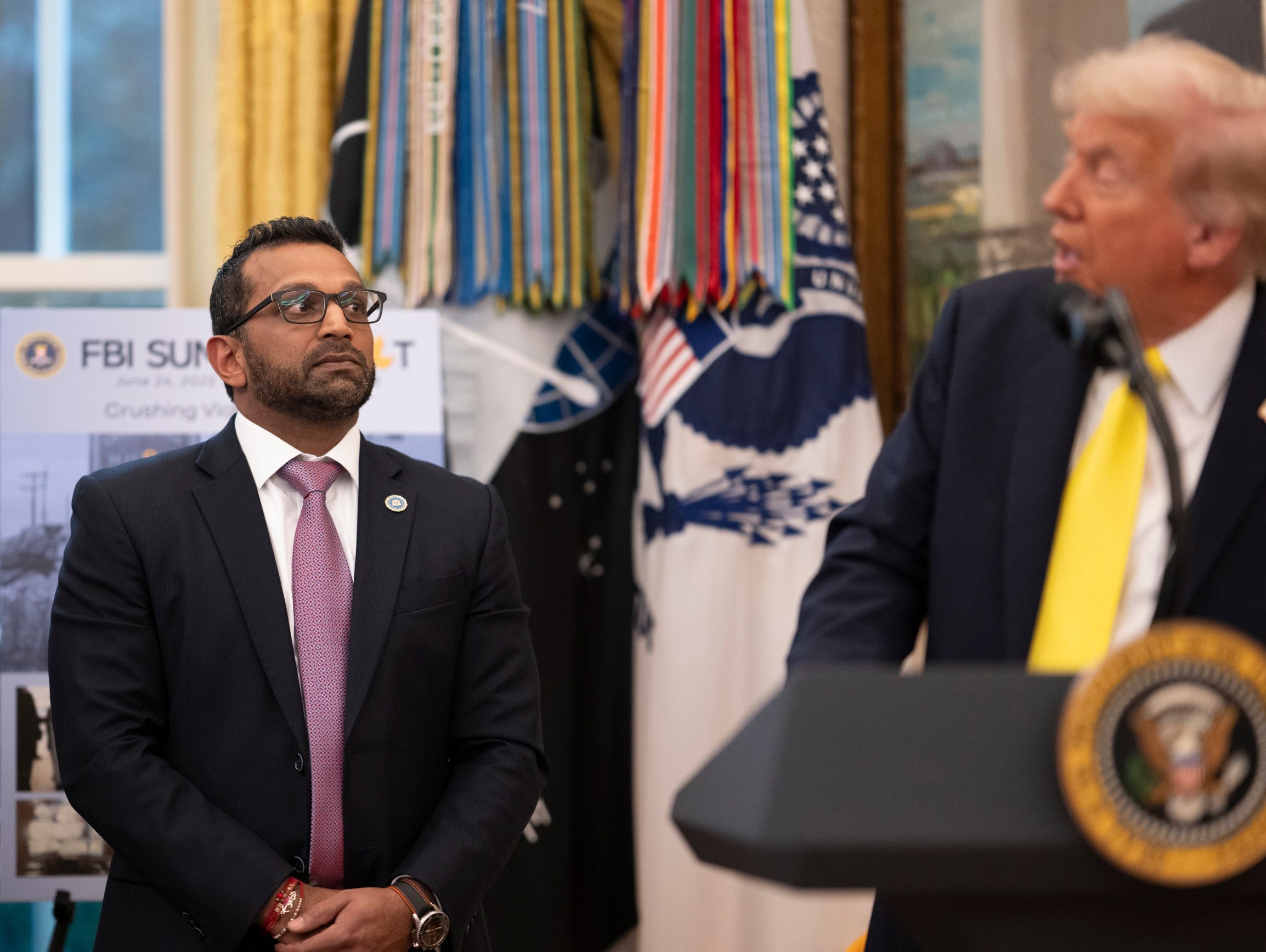
FBI Director Kash Patel has now filed two defamation suits, one against a former FBI official and the other against the Atlantic and one of its reporters. Both suits allege that the defendants falsely portrayed him as unfit for the job he holds. The day after Patel filed the second suit in federal district court in Washington, D.C., a federal judge in Texas dismissed the first. It may seem unsurprising that a Trump administration official would strike back against unfavorable press coverage in this way. The president has brought multiple suits against press organizations with allegations of one kind or another that they published false stories injuring him as candidate, businessman, and president.
But Patel is a senior Department of Justice employee, not the president, and he is bound by the executive branch-wide standards of conduct that all department officials must observe. They implicate his ethical obligations to keep his personal interests—in this case, holding onto his job—separate from his public responsibilities as FBI director. Those ethical standards include compliance with the requirement that employees subordinate private interest, or “gain,” to public service. The ethics rules in the executive branch are replete with concerns about the separation of public service from private interest. The FBI Ethics and Integrity Program Policy Guide advises bureau employees that the “statement, ‘Public service is a public trust’ underlies all aspects of Government service” and that “FBI employees have a responsibility . . . to place loyalty to . . . public service above private gain.”
The public reporting so far on Patel’s motives in bringing the suit suggests a strong personal interest in staving off a dismissal from his post. Patel alleges that the Atlantic seeks to “drive him from office” and that it “has for months pursued a demonstrable editorial campaign” to “cast his tenure as failing.” He challenges the article’s “central thesis” that Patel “is a derelict and erratic leader, who abuses alcohol to the point of being unfit for his duties.” That thesis is apparent from the title of the article that prompted the suit: “Kash Patel’s Erratic Behavior Could Cost Him His Job.” Patel’s defense is that he is, in fact, an outstanding FBI director who has “achieved historic law enforcement results” that are detailed at length in the complaint.
The context in which Patel brought the suit adds to the evidence that his lawsuit is a response to his job insecurity. Administration officials have suggested in background comments to the press that “it’s only a matter of time” before he is fired. In these circumstances, it is reasonable to suspect that “the complaint [is less] a serious defamation claim and more a desperate performative plea to convince Donald Trump that Patel is ‘a fighter’ who doesn’t deserve to be kicked to the curb like so many other scandal-plagued administration officials.”
Doubtless the suit may also be intended to send a message to other publications critical of Patel’s FBI directorship that they run the risk of drawing a lawsuit seeking hundreds of millions of dollars in damages. But this objective circles back to the same overriding concern with limiting reporting that could cost him his job. And even if Patel also genuinely believes that he has been defamed, the possibility of multiple motives cannot spare him from inquiry into a reason, and perhaps the predominant one, that is inconsistent with the applicable standards of conduct.
One might be relieved that the government is not paying for the suit—and it is certainly better that taxpayer funds are not being used to cover the costs of these legal actions. But that misses the point. In the case of Patel, the public does not have a clear and distinct interest in Patel’s remaining FBI director. Patel clearly does have that interest and is taking personal legal measures to protect it. The relief he is seeking includes monetary damages payable to him.
In application, this public-private separation draws most attention when it protects against the exploitation of official power to achieve private gain, such as where government employees seek to use their official position or influence to gain a financial advantage for themselves, their friends, or their families. However, the insulation of public responsibility from private interest that the ethics rules seek to achieve sweeps even more broadly. For example, the executive branch rules generally do not permit government employees to endorse products or services, even if they or others close to them do not expect to benefit.
Patel’s lawsuit establishes in various ways the tension between his official role and personal interest in keeping it. Now that Patel has taken his case outside the government, the president will have to consider whether his firing would be a victory for the much derided “fake news.” As one commentator noted, “Trump was reported to be losing patience with him, but he’s probably not going to fire him until the controversy calms down.” That is good for Patel, who buys time, but not so much for whatever moves might have been underway within the DOJ and the White House to dismiss an FBI director whose continuing tenure may be damaging to the bureau.
A libel action is also always a risk-laden proposition for the plaintiff, who exposes himself and others to legal discovery, including document production and testimony under oath. Not only Patel but other officials would be subject to depositions seeking detailed information about a range of matters that bear on how the administration is meeting its law enforcement responsibilities. Patel may be ready to run those risks to defend his reputation and keep his job, but he is spreading the risks of this lawsuit around to others in the government who may care less than Patel does about his job security—and who now face involvement in a libel suit.
One objection to this line of reasoning might be that government officials should be able to defend against baseless damage to their reputations and that the “actual malice” standard for successful suits under New York Times v. Sullivan serves to ensure that only the truly meritorious suits will survive. But the Supreme Court fashioned the “actual malice” standard to safeguard “the freedom of speech and of the press that is guaranteed by the First and Fourteenth Amendments.” The ethical rules that emphasize that public office is a “public trust” and require public officials to perform official duties without regard to personal self-interest present different questions. It is, of course, possible to conceive a libel suit by an executive branch official that alleges harm to reputation but does not inject personal interests into the conduct of his or her public responsibilities. On what we know so far, this does not seem to be Patel’s case.
The entire question of Patel’s use of private legal action in these circumstances is appropriate for DOJ inspector general review. The inquiry would be useful in bringing out relevant facts that are not currently available in the public record. Is Patel financing the suit, or are other private parties footing the bill? If others are putting up money, who, and how did they become involved? Did Patel discuss with other bureau employees—such as a key communications adviser who was formerly his “longtime personal publicist”—whether filing of the defamation suits might bolster his chances of keeping his job? Did Patel inform the attorney general and the White House that he planned to take legal action, and did they give explicit approval? Following review, what will this DOJ conclude about the ethical issues raised by this strategy?
I thank Ema Rose Schumer and Tia Sewell for editorial assistance.
