


Last week the American Enterprise Institute published a Constitution Day lecture that I gave in September called “Presidential Greatness and the Fragility of Judicial Supremacy.”
The essay sought to explain the paradox that “every widely recognized ‘great’ or ‘eminent’ president, and practically all of the so-called ‘near-great’ presidents, pushed the limits of executive authority so aggressively that each was denounced in his day as undermining the Constitution.” Consider:
Political scientist Richard Pious: “Presidents who go down in the history books as ‘great’ are those who reach for power, who assert their authority to the limit.”
Political scientist and historian Clinton Rossiter: If a president is not “widely and persistently accused in his own time of ‘subverting the Constitution,’ he may as well forget about being judged a truly eminent man by future generations.”
Historian Arthur Schlesinger Jr.: “The Greats and the Near Greats all took risks in pursuit of their ideals. They all provoked intense controversy. They all, except Washington, divided the nation before reuniting it on a new level of national understanding.”
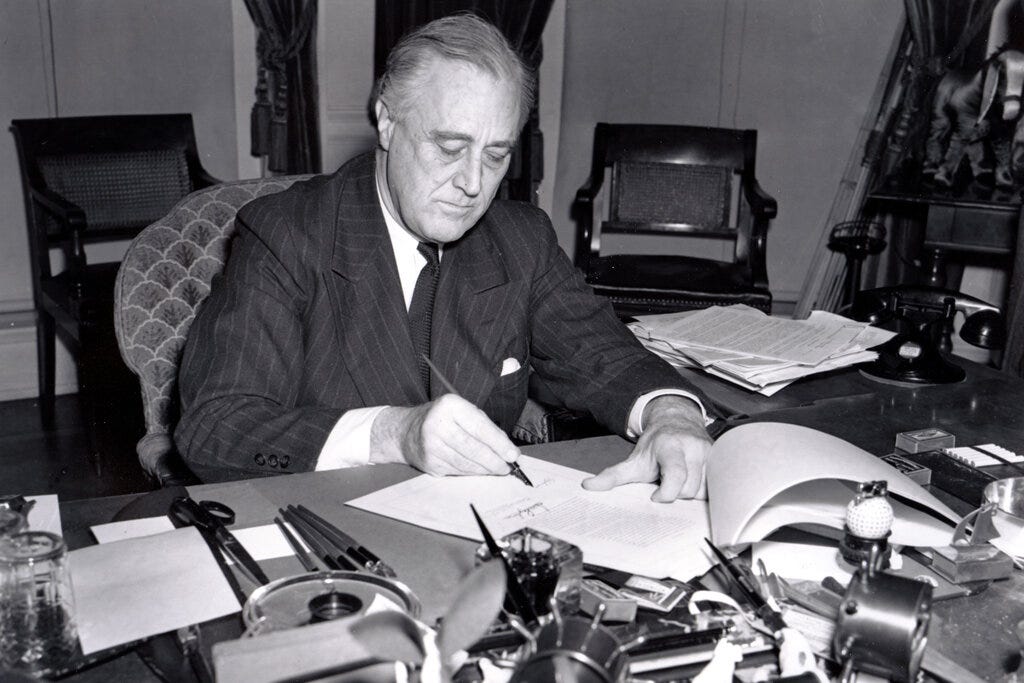
The presidents these scholars had in mind included Thomas Jefferson, Andrew Jackson, Abraham Lincoln, and Franklin D. Roosevelt.
My lecture—drawing on work by Richard Fallon and Keith Whittington, which in turn drew on a robust political science literature—sought to explain why these presidents were Constitution limit-pushers, to tie this explanation to debates on departmentalism versus judicial supremacy, to defend both departmentalism and judicial supremacy (of a sort), and to connect the analysis to current issues involving the Trump administration.
You can find the lecture here.