


Please click here to opt in to receive via email our Roundup—brief daily summaries of news developments and commentary related to executive power.
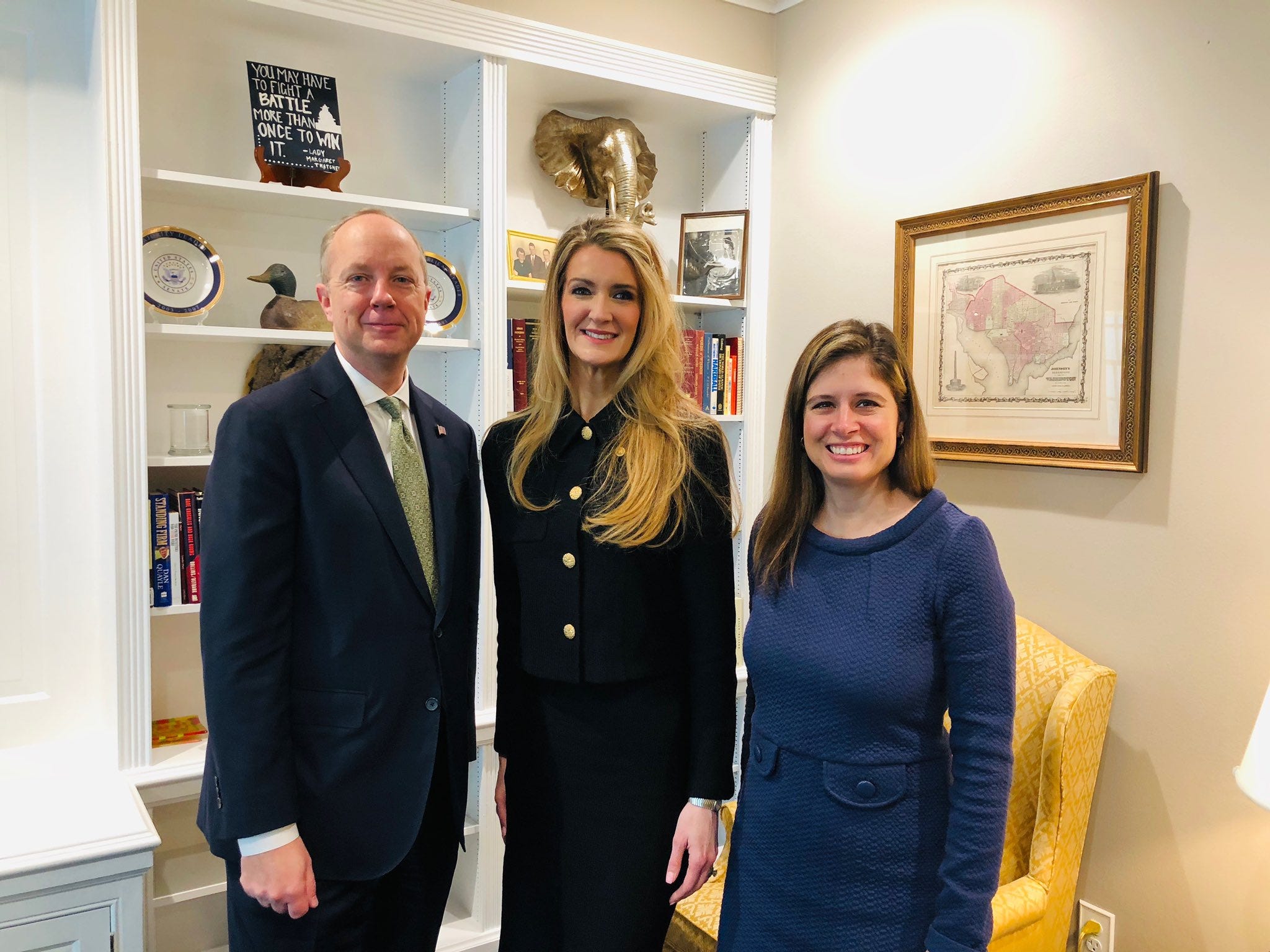
President Trump’s nominee for Comptroller General of the United States, Eric Ueland, is nominally qualified for the job. He worked as a Senate staffer for at least fifteen years as, among other things, Senate Majority Leader Bill Frist’s chief of staff and the Republican staff director of the Senate Budget Committee. And during the first Trump administration, he (again, among other things) managed the foreign assistance budget of the State Department and USAID.
But his nomination raises the serious question whether a senior official in the executive branch agency that has sought to undermine Congress’s spending power, the Office of Management and Budget, can credibly lead the congressional agency, the Government Accountability Office, charged with helping Congress defend that power.
For a year and a half, Ueland has been Deputy Director for Management of an OMB that has aggressively stretched the law in seeking to wipe out congressional spending prerogatives. Before he was confirmed to that position in May 2025, he served as OMB Director Russell Vought’s acting chief of staff during the early high point of executive branch defiance of appropriations laws. Could he possibly be expected to switch teams and defend congressional prerogatives?
Vought despises GAO and claims it “shouldn’t exist.” Under his direction, OMB has sought to limit GAO’s ability to oversee the executive branch. Vought also believes in a “radical constitutionalism” that would chop down congressional prerogatives and inflate presidential ones, and he has done both of those things in the last two years. If Ueland holds anything approaching Vought’s views (and there are many indications that he does), he could, as Comptroller General, do significant damage to Congress’s already diminished powers during Trump’s last two years, and possibly as many as fifteen.
GAO is an independent legislative branch agency that audits and investigates executive branch programs for Congress, supports congressional oversight, issues legal decisions on agency compliance with appropriations laws, polices presidential impoundments (and can sue over them), and advises Congress on agency actions that are subject to the Congressional Review Act. The Comptroller General runs GAO and thus holds an enormously important position for the protection and vindication of core congressional prerogatives.
The Comptroller General is appointed by the president and confirmed by the Senate. He serves a single 15-year term and cannot be removed by the president. Rather, he may be removed either by impeachment or by a joint resolution of Congress (which must be signed by the president or overcome a veto) for permanent disability, inefficiency, neglect of duty, malfeasance, or a felony or conduct involving moral turpitude. If Ueland is confirmed, he could serve until 2041.
His confirmation hearing will take place Thursday before the Senate Homeland Security and Governmental Affairs Committee, chaired by Senator Rand Paul. This is a quick (and legally controversial) nomination and attempted confirmation during the lame duck period before the Democrats take control of Congress in January.
A Comptroller General, if he wished, could significantly weaken Congress vis-à-vis the executive branch. The Comptroller General can control GAO’s appropriations law decisions about presidential impoundments that are the grounds for negotiations and disputes between the branches. The Comptroller General is the only person the Impoundment Control Act authorizes to sue to enforce Congress’s prerogatives under the Act. If he doesn’t want those lawsuits to happen, they won’t. The Comptroller General can also seriously limit the oversight support that GAO provides across congressional committees. And he can decide which investigations receive resources and how GAO sets priorities and allocates resources for its legal work.
If Ueland holds Vought’s views, then Senate confirmation would be an act of severe self-sabotage. Does he? In written answers following his 2025 confirmation hearing, Ueland supported Trump’s position on “restoring impoundment authority.” And Ueland has been working alongside Vought since the beginning of Trump’s second term. These two facts alone should give the Senate, including Senate Republicans, serious pause.
There are counterpoints, of course. While the Comptroller General and GAO have, in my view, a deserved reputation for professional independence and credibility across party lines, some Senate Republicans see GAO as hopelessly partisan in the Democrats’ direction. Others may hold a principled view that the Impoundment Control Act is unconstitutional. Others appear willing to subordinate Congress’s institutional prerogatives to Republican political interests. Senate Republicans have generally gone along with OMB’s weakening of Congress’s appropriations power, sometimes because they favor particular non-expenditures. More generally, they might see a GAO led by Ueland as an asymmetric advantage in helping Republican presidents and hurting Democratic ones.
Yet at least some Senate Republicans have grown weary of the Trump administration’s refusal to spend appropriated funds and other abuses of the appropriations process. GAO has found that the executive branch violated the law in several impoundment decisions and deemed President Trump’s pocket rescissions unlawful. There is pressure from both sides of the aisle for the Comptroller General to sue. Yet it is hard to imagine Ueland doing that if he is confirmed.
The Republican vote on Ueland is a test of the White House’s continuing power over Republicans in the Senate, including several whose service ends in January, and of whether today’s politics is separation of parties all the way down. One might think that Senator Susan Collins, who as chair of the Senate Appropriations Committee voted to confirm Vought and then watched in frustration while he (as promised) crushed the power she was charged with protecting, would as a last act vote in favor of branch rather than party. One might think that outgoing Republican “institutionalists” like Senators Mitch McConnell, Thom Tillis, Bill Cassidy, and John Cornyn would do the same.
The stakes here are quite large. The “power over the purse,” Madison said, may be the “most complete and effectual weapon with which any constitution can arm the immediate representatives of the people, for obtaining a redress of every grievance, and for carrying into effect every just and salutary measure.” Administrations of both parties have diminished the impact of this power. Russell Vought’s OMB has for two years made a sweeping assault on it. And now the Trump administration audaciously asks the Senate to install Vought’s deputy for a 15-year term to lead the guardian of Congress’s appropriation power.
As Justice Scalia once said, “This wolf comes as a wolf.”