


Please click here to opt in to receive via email our Roundup—brief daily summaries of news developments and commentary related to executive power.
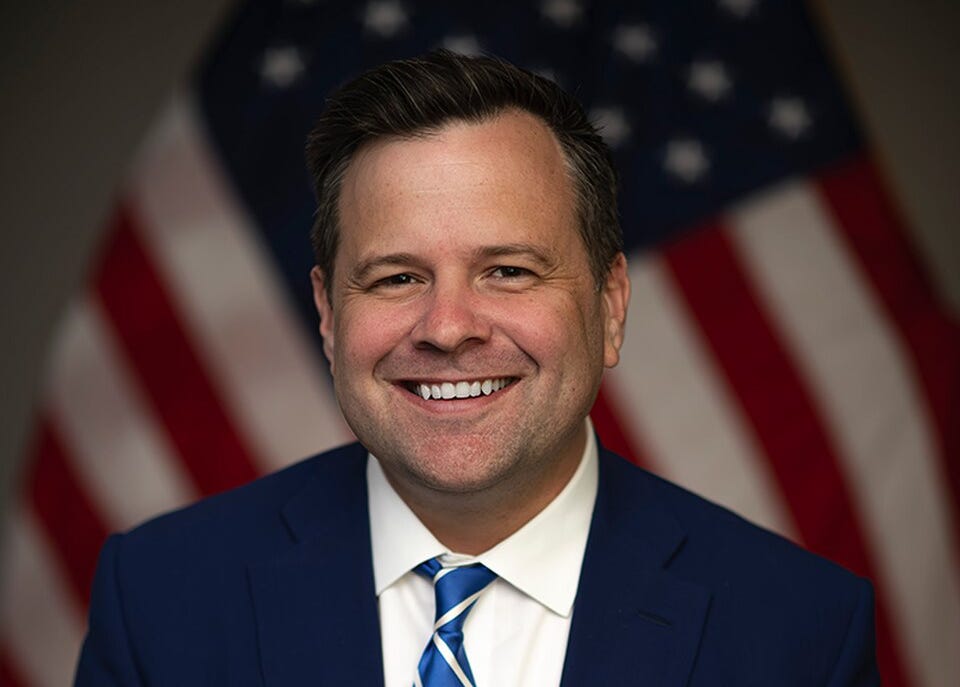
In the immediate aftermath of Trump’s Truth Social announcement that he was appointing Bill Pulte as acting director of national intelligence, commentators noted the undeniable: Pulte has no national security experience to qualify him for the role as leader of the U.S. intelligence community. It is a position that by law, in the cases of a formally nominated director, would require “extensive” experience of that kind. Members of the president’s party in the Senate, including Senate Majority Leader John Thune, conceded the problem. Thune opined that the job called for a “professional,” adding that Pulte would face a “lengthy road” to confirmation if the president decides to nominate him for Senate confirmation to the position.
Pulte is also a starkly political appointment, having defined himself in his leadership of the Federal Housing Finance Agency as a reliable ally in the president’s program of retribution against his personal and political enemies. Pulte has failed in most of what he has attempted, including the push for a discredited criminal investigation intended to force Jerome Powell out of the Federal Reserve, as well as the prosecution of New York State Attorney General Letitia James. But whether he has succeeded is beside the point. He lacks any national security experience but has an ample track record in weaponization.
The question is: What happens next? Is there a bipartisan majority of the U.S. Senate motivated to block the appointment by pressuring the president to retreat as he did, under pressure from strong congressional opposition, from the Anti-Weaponization Fund?
The case for Congress to take a bipartisan institutional stand against Trump’s choice of Pulte is strong. Nothing prevents Congress from treating Pulte as a formally nominated director and, with the goal of pressuring the president to reverse course, subjecting his decision to the close scrutiny that an appointment of this significance and sensitivity merits. The steps it takes could include a demand that Pulte appear and testify on this designation as acting director.
Here, first, are the elements of the case for Congress to act:
As this is a designation under the Vacancy Act, not a nomination, it is not clear that the statutory requirement of “extensive national security expertise” applies. But the appointment clearly frustrates Congress’s expressed expectation of the qualifications for someone holding that position. This is not a short-term issue. As Jack and I have written, the manipulation of the Vacancy Act to skirt Senate confirmation procedures can result in an “acting” who serves years, potentially for more than two-and-a-half years. In Pulte’s case, this could mean that he could be “acting” for the duration of Trump’s term without meeting a core qualification for a director who was nominated and confirmed to the position. Trump has made clear his preference for the “flexibility” afforded him by the appointment of “acting” Cabinet members who avoid the confirmation process. In this instance, Congress has to consider whether this “flexibility” should allow for a years-long evasion, at the very least in spirit, of the requirement that the head of the U.S. intelligence community have extensive national security experience.
As Congress considers this issue, it might also take into account that the country is currently at war, and that a move such as this one, affecting the leadership of our intelligence community, is especially dangerous. It cannot readily be known how allies participating in intelligence sharing will react to the sudden emergence of a key player so thoroughly political and lacking in the relevant knowledge or experience.
Then there is the question of whether Congress is comfortable with someone who has specialized in a weaponized politics serving a leadership role in the intelligence community. Will Pulte continue to support the president’s political preoccupations and vendettas, but now with whatever resources and information he can bring to bear on that project from his perch at ODNI? The main DNI statute provides generally that, unless the president directs otherwise, Pulte will have “access to all national intelligence and intelligence related to the national security which is collected by any Federal department, agency, or other entity, except as otherwise provided by law or, as appropriate, under guidelines agreed upon by the Attorney General and the Director of National Intelligence.” Questions about Pulte’s potential uses of this information are pressing in light of the issues raised about whether and how, in developing and promoting mortgage fraud claims against Trump adversaries, he used records and other resources available to him as director of the Federal Housing Finance Agency. And as the tenure of his predecessor Tulsi Gabbard demonstrated, an ODNI head so disposed or directed can also become active in supporting, in the name of national security, other Trump political projects, such as advancing the president’s claims about rigged elections.
All of these reasons support a congressional call for Pulte to appear and testify about this appointment and his understanding of the role, and to address other questions about his suitability for the job. Those questions would include ensuring a full record on his lack of national security experience and knowledge and his reasons for believing that he could nonetheless carry out the responsibilities of the position. He should be examined closely on his basic understanding of those responsibilities, such as how, in light of his history and the questions it raises, he would credibly propose to meet the statutory requirement that he “implement policies and procedures . . . to require [throughout the intelligence community] sound analytic methods and tradecraft” which are “independent of political considerations”? And how he understands and will comply with the requirement that directors acting on instruction from the president to perform “intelligence-related functions” must “notify the congressional intelligence committees immediately in writing with the description of such other intelligence related functions, directed by the president.” Has Pulte already received any such instructions?
Congress may ask these and other questions in hearings conducted in the same manner as a confirmation hearing on a formal nomination. Sen. Thune has suggested that Pulte, if nominated, would struggle to be confirmed. One hurdle would certainly be that he cannot meet the statutory requirement that the nominated director have “extensive national security expertise.” In these circumstances, it makes little sense for Congress to defer attention to this and other major problems with this appointment only because it was made on an acting basis.
Pulte could, of course, decline to testify, but that would serve to bring out in even sharper colors the president’s disregard for the qualification that Congress expressly wrote into the statute for the position. In the event of a refusal to testify, Congress could consider a subpoena to compel the testimony. And should Pulte testify, I suspect that the exposure would prove disqualifying.
These are only a few of the escalatory moves Congress could take to respond to administration recalcitrance. It could also pressure the president to reconsider the appointment by holding up action on other administration priorities, just as a handful of senators successfully did in forcing the administration to abandon the Anti-Weaponization Fund. There are reports today that, unless Trump rescinds the Pulte designation, Democrats might withhold votes for renewal of the targeted surveillance authority under Section 702 of the Foreign Intelligence Surveillance Act (FISA), which is due to expire June 12. In this and other ways, Congress can raise the costs to Trump of this appointment and test how much he is willing to bear. The days ahead will be telling about what Congress is prepared, or not, to do.
